

An Italian’s Guide to the Canadian Rockies
Aurora & Federico Canadian trip recap : July 31 - Aug 14/2026
General trip information
We travelled for 13 days in August with the campervan “Fred”, from Q Campervans. Moving between British Columbia and Alberta, the itinerary followed a big loop; Vancouver to Whistler and Joffre Lakes, then north to Jasper, along the Icefields Parkway towards Lake Louise, Yoho, Banff, Kananaskis and finally back to the coast, with a stop in Squamish. The last days after dropping off the campervan would be spent in Vancouver. Our travel style was very simple; campgrounds every night, daily hikes, and a focus on nature, trekking and wildlife watching. Quick note from Quennel: “I have attached a map of the route they took and also hyperlinked the campgrounds and other notable stops for ease of reference. All underlined and bolded words are hyperlinked to appropriate websites.”
Want to book a Q Campervan?? Use the button below to book your trip!
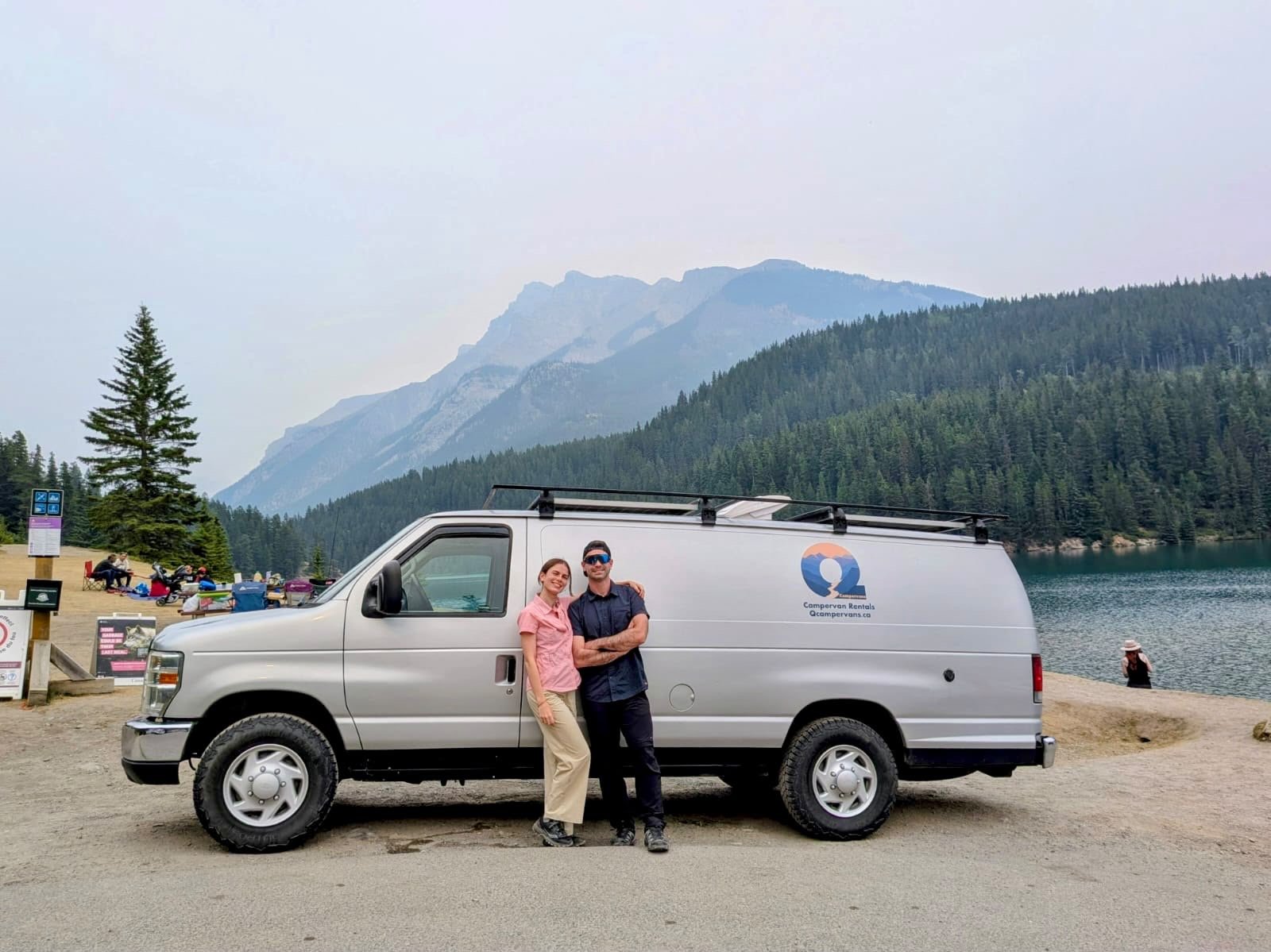
Q Campervan “Fred” with Aurora and Federico next to Two Jack Lake in Banff National Park.
Itinerary, hikes and campgrounds
Whistler + Joffre Lakes
We spent the first night at Whistler Olympic Park RV & Campground, which we really liked. It’s a large campground with a big service area: spacious washrooms, shared kitchen, play area, covered common area and above all, free laundry. The van sites are very large and the elevated position offers a nice view over the surroundings. It’s a bit isolated because it’s in the former 2010 Olympic area, but that’s exactly what makes it quiet. We found it well equipped and good value for money.
From there we drove towards Joffre Lakes to hike. We really enjoyed the trek and didn’t find it particularly difficult. It’s an intermediate-level trail but manageable, with great scenic rewards.
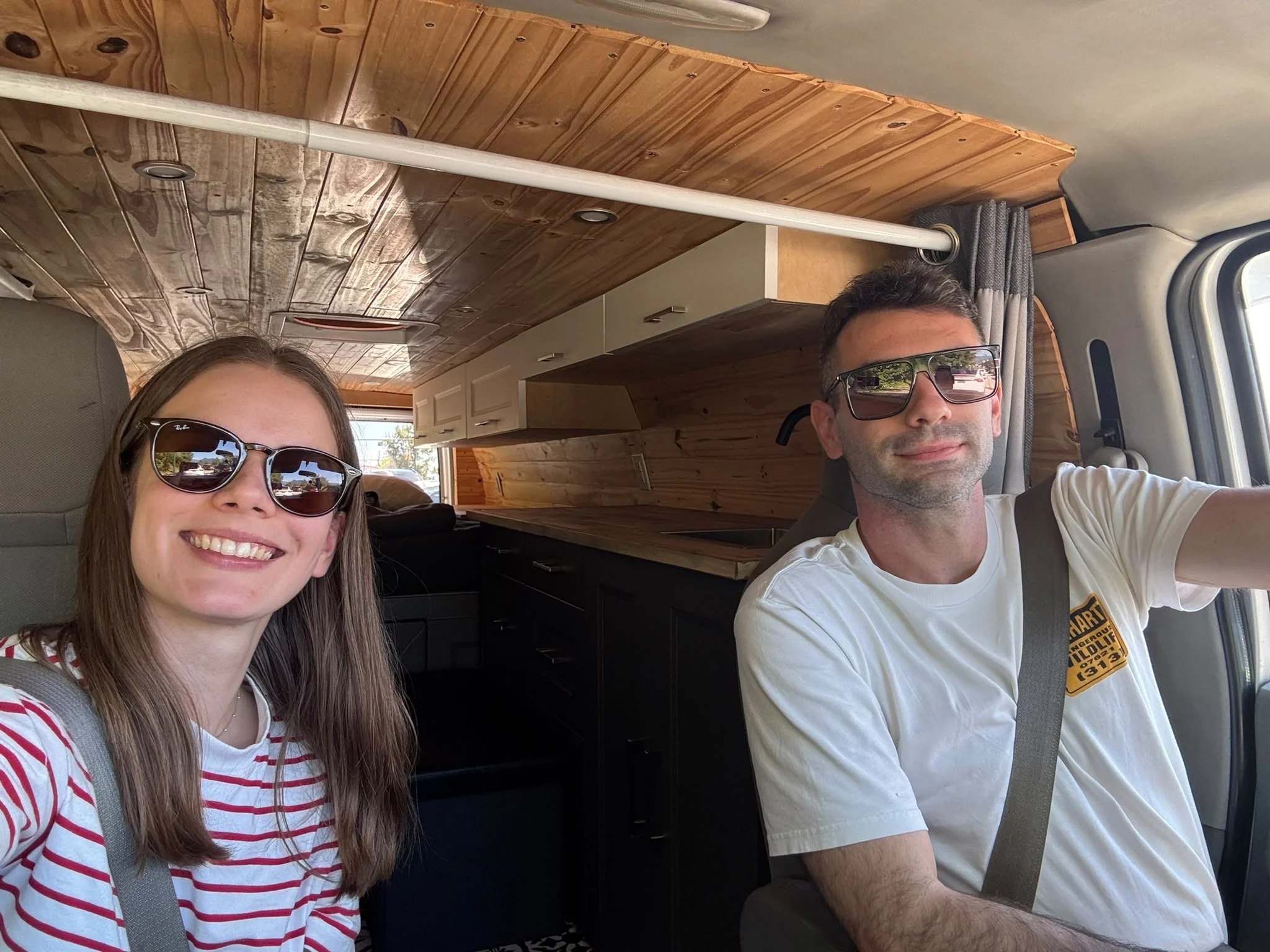
Cache Creek and heading north to Jasper
The next stop was Cache Creek, where we stayed at Cache Creek Campground. It’s a “classic” transit campground: facilities in good order, showers, free wifi, clean washrooms and decent sites. The surrounding area is quite arid (much like a desert) and not especially scenic, but it works well as a one-night stopover. Continuing north, we passed through the Kamloops area and then stopped around Clearwater to visit two waterfalls and canyons in the area. The falls were Spahats Creek Falls and Helmcken Falls: short but spectacular stops that nicely break up the drive towards Jasper.
Mount Robson area and Tête Jaune Lodge
As we approached Mount Robson, over the weekend all BC Parks campgrounds were fully booked and required a three-night minimum stay. Booking in advance, especially in National parks is a great idea. We therefore decided to go for a private campground, which in British Columbia often turned out to be a good idea, as there are many and they’re generally well run. Tête Jaune Lodge Campground was our favourite campground of the entire trip. It’s surrounded by greenery, close to the river, and has a beautiful forest atmosphere. The facilities are new and clean, there are laundries, a playground, a bar and a restaurant overlooking the river. The area with benches right by the water is perfect to enjoy the sunset. Wifi is available but not always fully stable; mobile reception works as well. Overall it was a really pleasant stop, in a very relaxing natural setting.
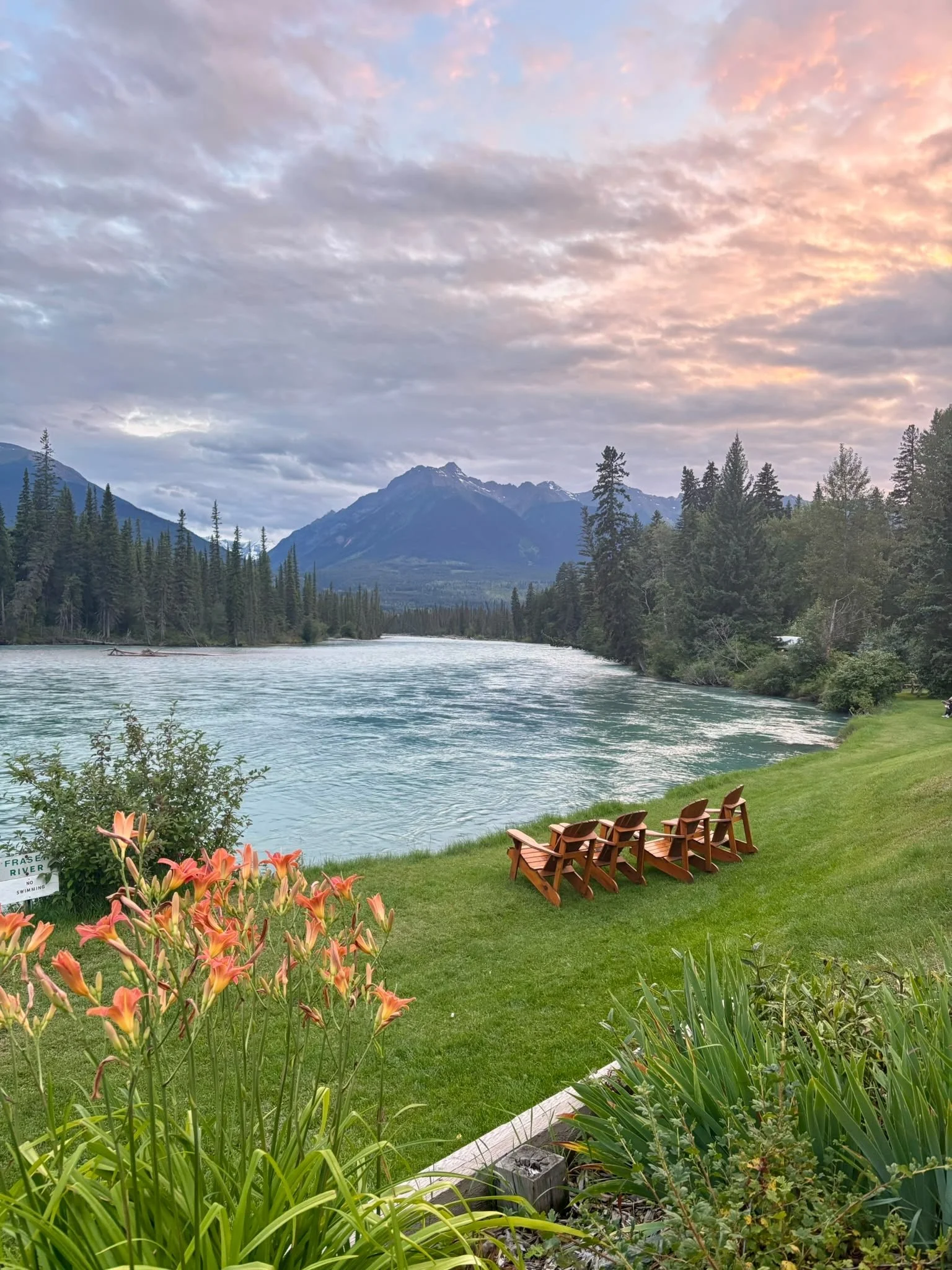
View from Tete Jaune Lodge Campground north of Valemount.
Jasper and Maligne Lake
Arriving in Jasper was a bit different from what we had planned. We were supposed to hike Edith Cavell Meadows, but the trail was closed, so we opted instead for the Maligne Lake area. There we hiked the Bald Hills Trail and took a walk to Moose Lake: no moose sightings unfortunately, but a very beautiful trek, with scenery that is definitely worth the visit.
After the hikes we spent some time in Jasper town itself, which turned out to be very useful for stocking up on groceries and fuel before heading into the more remote, less serviced stretch of the trip. We also enjoyed stopping there for a beer and a bit of atmosphere before going back to the campground. The area around Jasper townsite is sadly heavily marked by recent wildfires, with burnt landscapes and a strong visual impact. Regardless, the mountain view are still expansive and breathtaking. The Maligne Lake area is especially charming.
In terms of campsites, we camped at Whistlers Campground in Jasper. It’s huge, quite easy to book via the Parks Canada website, and has decent facilities and free showers. The atmosphere, though, is a bit bleak because the area has been clear-cut and there are very few trees. Functional, but less charming than other campgrounds we stayed at.
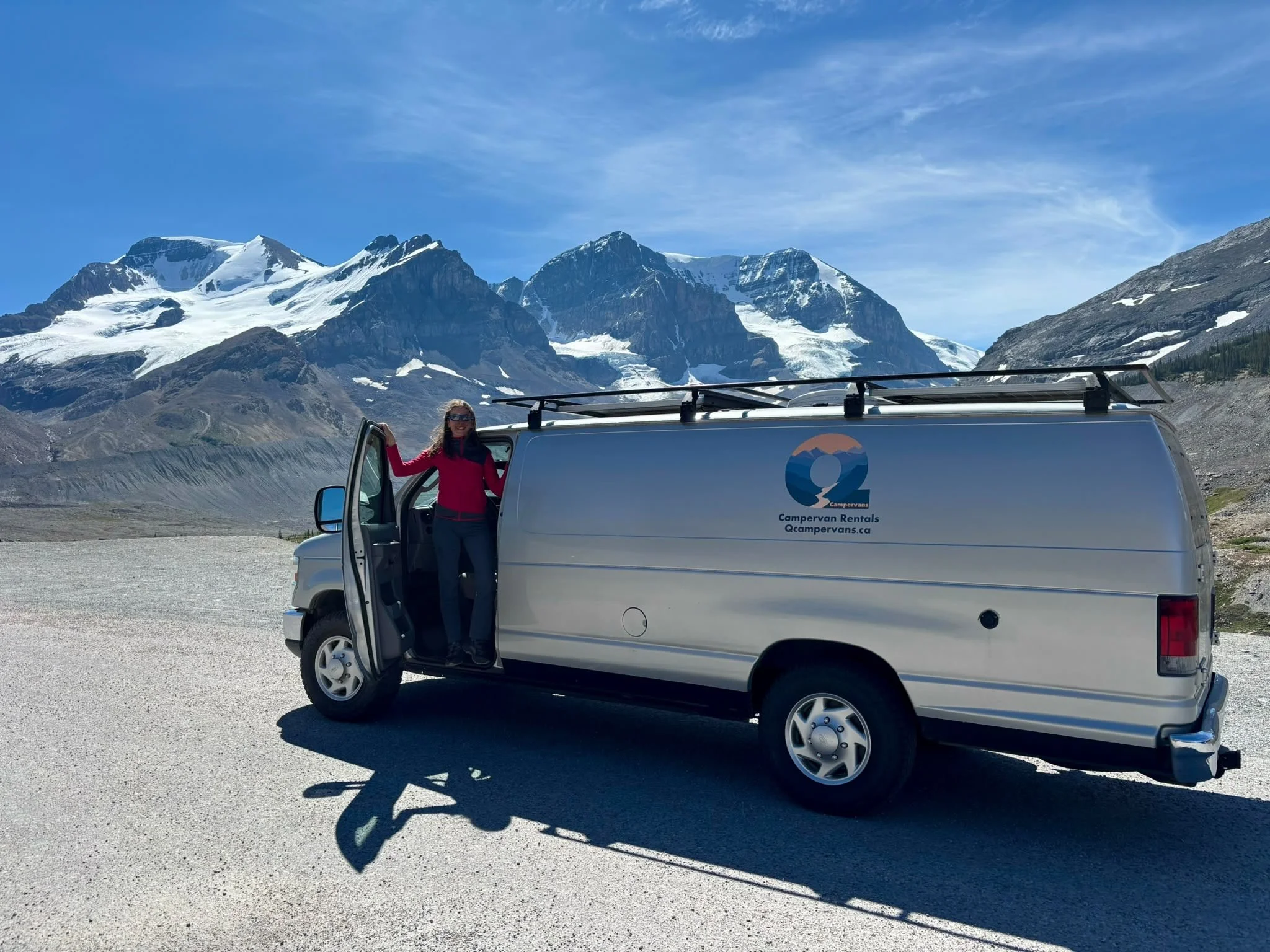
Aurora with Fred on the Icefields Parkway!
Icefields Parkway and Athabasca Glacier
Heading south we first stopped at Athabasca Falls, which makes for a quick but very scenic stop, and then we continued to the Columbia Icefield area for a hike on the Athabasca Glacier. Here we chose a guided walk, the Icewalk, and we were thrilled with it: more than four hours on the glacier with an expert guide, who took us to areas you wouldn’t be able to safely reach on your own. We saw people going up by themselves or using the big snow-coach vehicles, but the latter option felt too touristy and expensive; in our opinion the Icewalk is the best, most authentic and rewarding experience.
To camp along the Icefields Parkway we stayed at Rampart Creek Campground, one of the very few campgrounds along the road, all run by Parks Canada and with limited sites. Getting a site here was the trickiest part of the whole trip: we managed thanks to a waitlist system with notifications when a spot opened up. Rampart Creek is the wildest campground we stayed in: completely immersed in the forest, very basic facilities, only pit toilets with no flush and no running water, no “full comfort” campground services. The day before we arrived there had been a bear sighting, so the atmosphere felt quite intense. As a pure camping experience we enjoyed it less, but the location is ideal to explore the most spectacular stretch of the Icefields Parkway.
From Jasper southwards along this section, cell phone signal is practically non-existent. At the campground we had no service at all; the next morning we stopped at The Crossing Café, at the Saskatchewan River Crossing, where there is a café with a souvenir shop and open wifi, which was very useful to communicate and look up information for the next stages.
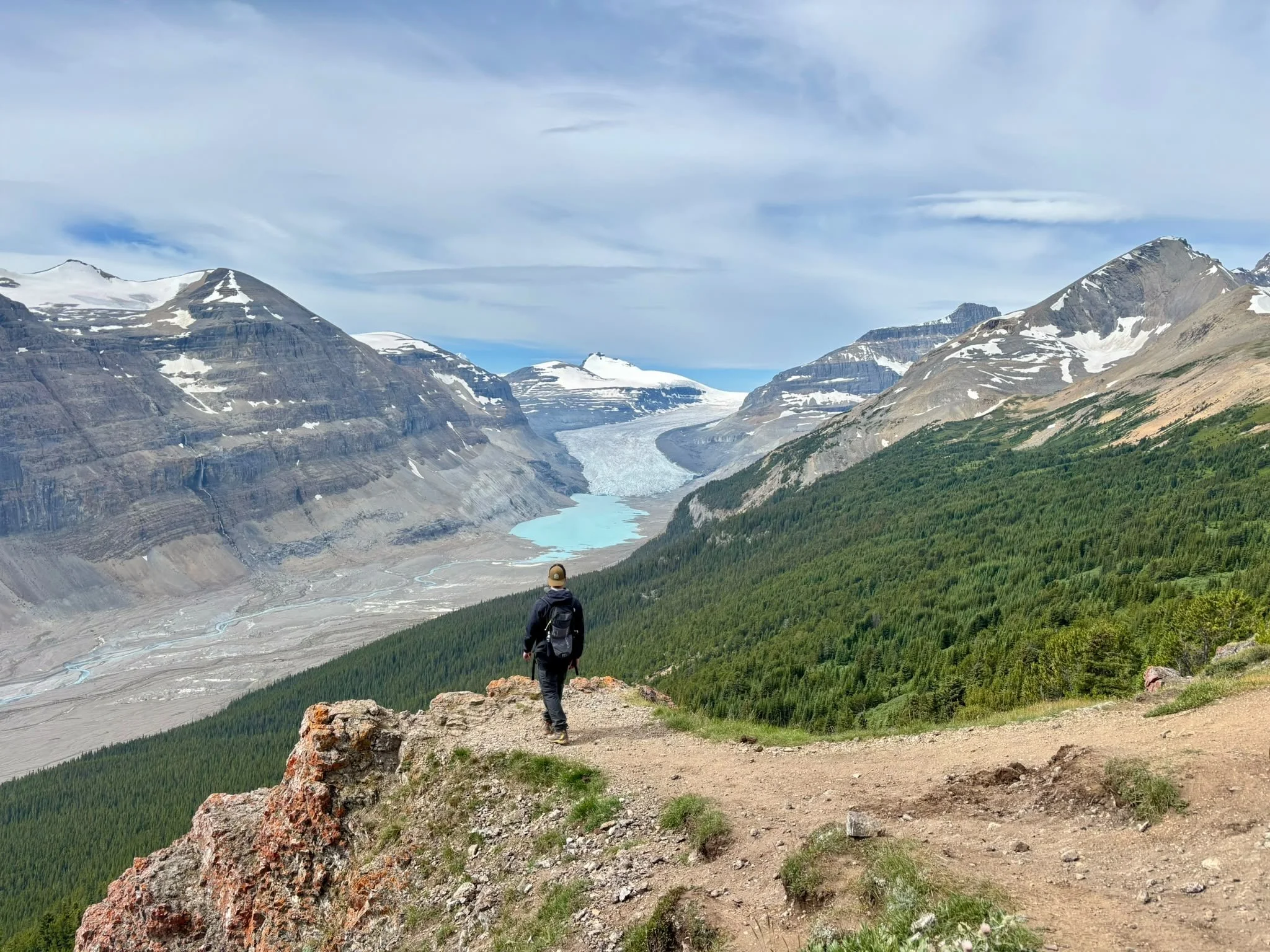
Federico on Parker Ridge Trail overlooking the Saskatchewan Glacier in Banff National Park, Alberta
Parker Ridge, Waterfowl Lakes, Peyto and Bow Lake
From that area we hiked the Parker Ridge Trail, which turned out to be one of the best hikes of the trip! It is a intermediate level with a climb that is very manageable and a fantastic view over the Saskatchewan Glacier. There are a few opportunities to see wildlife along the way, including a beautiful marmot.
On the same day we managed to stop at Waterfowl Lakes and then head up to Peyto Lake. The view over Peyto, from the higher area towards Bow Summit, is wonderful and fully lives up to the place’s reputation. Unfortunately, starting on August 5th a thick blanket of smoke from wildfires to the south moved in and significantly obscured the view over Bow Lake: potentially one of the best vistas of the whole trip, partly ruined by the smoke. Travelling through the Rockies from July-August can be risky for this reason; smoke can hamper the views to various degrees.
Lake Louise Campground and surroundings
For three nights we stayed at Lake Louise Campground (the area for vans and trailers, with no tents allowed due to bear activity). Logistically it was a perfect base: it allowed us to easily reach Lake Louise, Moraine Lake, the Bow Valley Parkway and other key spots in the area. However, it’s a very large and somewhat chaotic campground: many sites are quite far from the facilities, showers can be more than 300 metres away from some areas and, given the heavy crowds, queues at the showers form easily.
The most inconvenient aspect is the night-time noise: freight trains pass very often, about every twenty minutes, and the sound is extremely loud. You eventually get used to it, but it’s certainly not ideal for deep sleep. In short: unbeatable for location, less convincing in terms of comfort and tranquillity. With more options we probably would have considered other campgrounds, but this was the only one we managed to secure with some continuity through the waiting list, and there are no other private campgrounds in the immediate area.
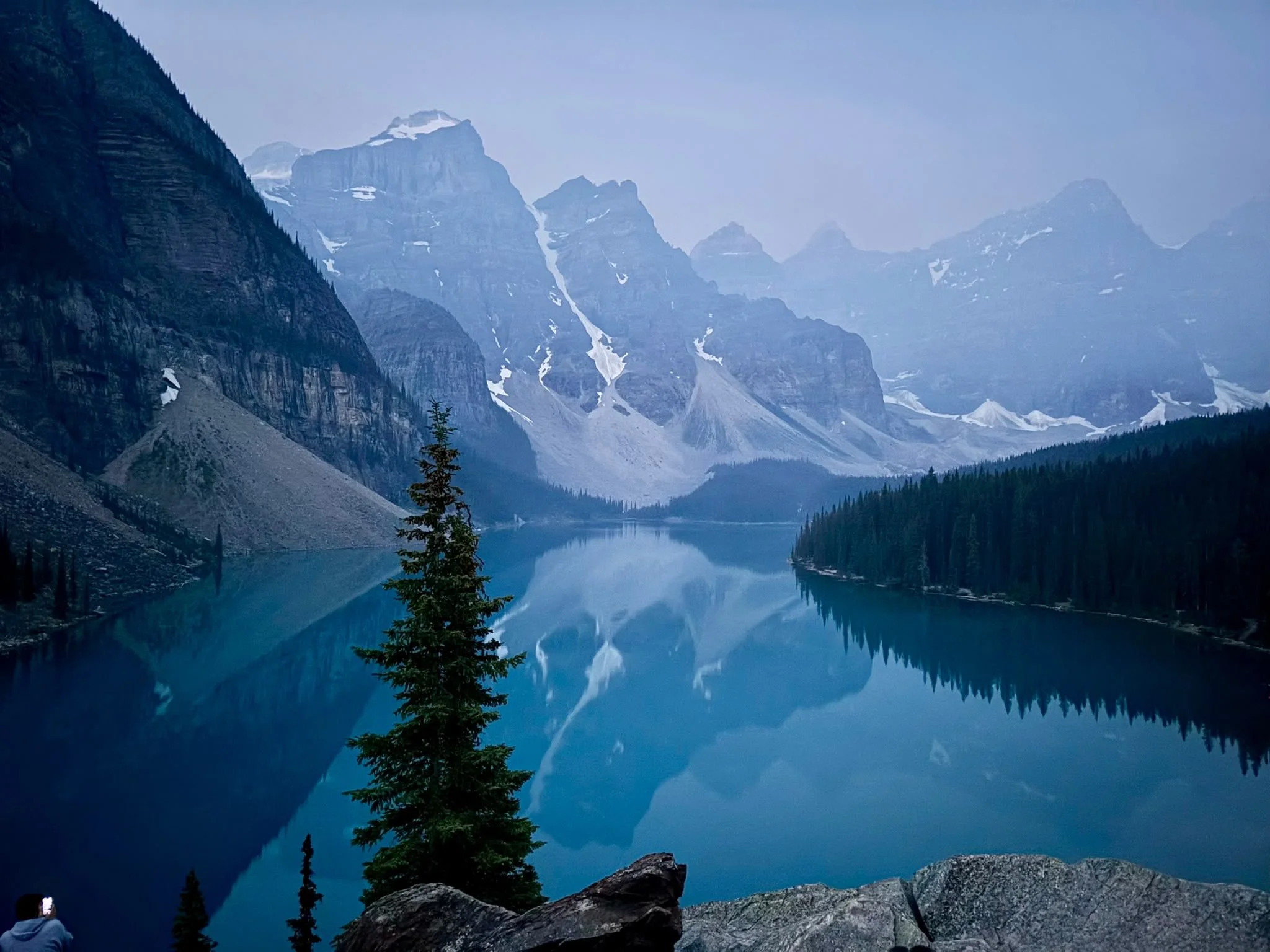
Moraine lake among the haze from the Forest fires deep in BC’s Interior
Emerald Lake and Yoho
Because of the smoke, we decided to move up our visit to Emerald Lake and headed towards Yoho National Park, including the Takakkaw Falls area. Visibility was poor there as well: for this reason we skipped the Iceline Trail, which really deserves to be done under clear skies to fully enjoy glaciers and valleys.
We spent more time around Emerald Lake. In the afternoon the sky opened up and we managed to go out in a canoe, which turned into one of the most beautiful and relaxing moments of the trip. We waited about 40 minutes in line, but the time passed quickly chatting with other travellers. Rental costs 100 Canadian dollars per hour, which felt fair for the experience, especially compared to Moraine Lake, where canoeing is about twice the price.
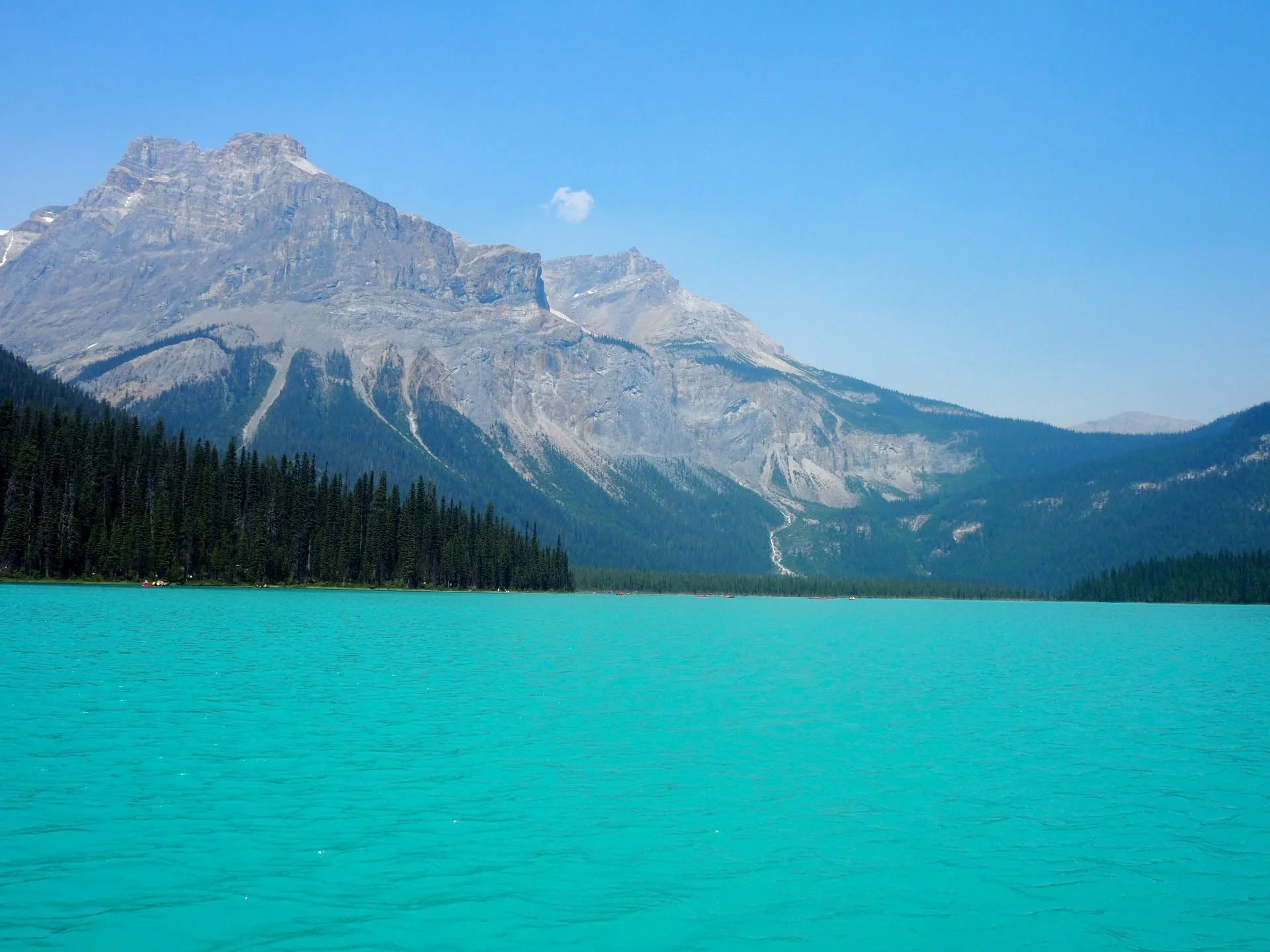
Turquoise water of Emerald Lake in Yoho National Park, British Columbia, Canada
Moraine Lake, Lake Louise and shuttle management
Access to Moraine Lake and Lake Louise in high season requires a bit of strategy. The Parks Canada shuttle booking system appeared sold out months in advance, so we organized ourselves differently. We avoided the virtual queue at the opening of last-minute sales, which many people told us was a frustrating experience, and instead chose to monitor the website in the days before. About a week prior to our visit, by opening the page several times a day, we managed to grab seats that had been released for the “Moraine Lake Alpine Start” shuttle.
The shuttle left at 4 a.m. from the Lake Louise parking lot, which was very convenient since our campground was right nearby. The bus fare was low (about 22 dollars for two people), while parking was quite expensive at 42 dollars: it was the only paid parking of the entire trip. We arrived at Moraine in the dark, climbed up to the Rockpile and waited for sunrise in very cold conditions, standing still for almost two hours. In hindsight we would probably arrive a bit later, avoid some of the cold and get more sleep. The sunrise itself was not as “magical” as in social media photos, but seeing the lake in full daylight is beautiful at any hour.
That day we had planned to tackle Sentinel Pass, one of the most recommended hikes, but the 3 a.m. wake up and the cold had worn us out. So we chose something a bit softer: the hike from Lake Louise to Little Beehive and Lake Agnes. The trail is not difficult, but it is long and the elevation gain is spread out over many kilometres. Lake Agnes definitely deserves a visit; there is a very famous tea house, but the line to get in was endless, so we skipped it.
During our Lake Louise stay we also asked around for the best wildlife viewing spots. The Bow Valley Parkway, which starts right there, turned out to be an excellent choice: going early in the morning (before 9 a.m.) and in the evening after 6 p.m., we saw five bears in total, two black/brown bears and three grizzlies, all busy eating berries at the roadside. We always watched them from inside the car, without getting out or approaching them: these are exciting moments, but they need to be experienced with great respect.
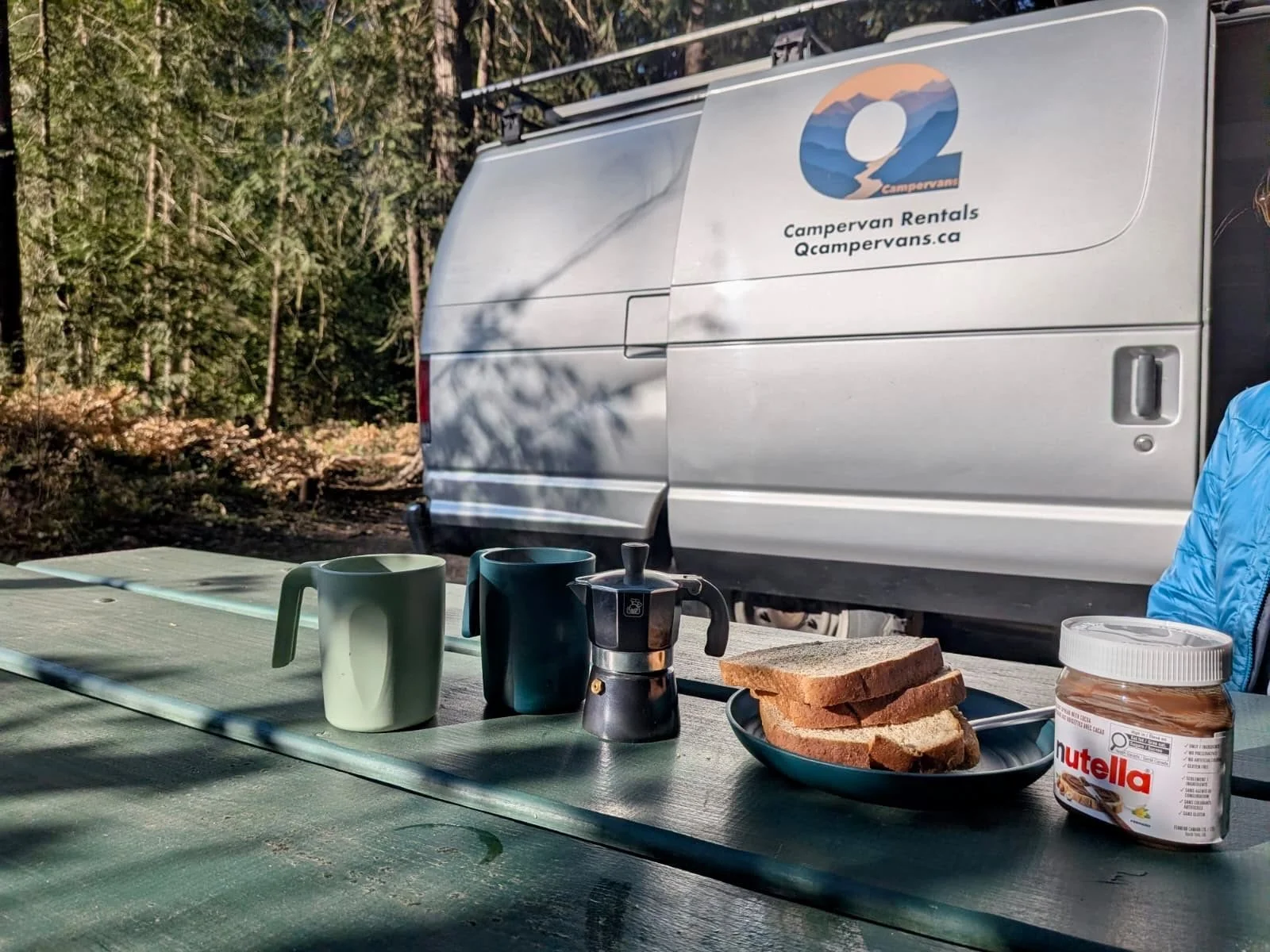
Coffee and a quick breakfast outside Fred :)
Banff, Johnston Canyon and surroundings
After the lakes we drove to Banff, where we walked around the town centre. The town is nice but very commercial, with a distinctly touristy feel. Because of the smoke we couldn’t see Mount Rundle or really enjoy the surrounding viewpoints, such as Vermillion Lakes.
The following night we stayed at Johnston Canyon Campground. We arrived around midday and our site was already free, so we could leave the van and hike Johnston Canyon on foot. The trail is an easy walk and very scenic but also very crowded. The canyon parking lot is paid and fills up quickly; elsewhere on the trip we generally had no parking issues.
We liked Johnston Campground: facilities were in good shape, showers were available, and the forest setting was pleasant. The only limitation was cell reception, which was quite weak, whereas in the Lake Louise area the signal was almost always available.
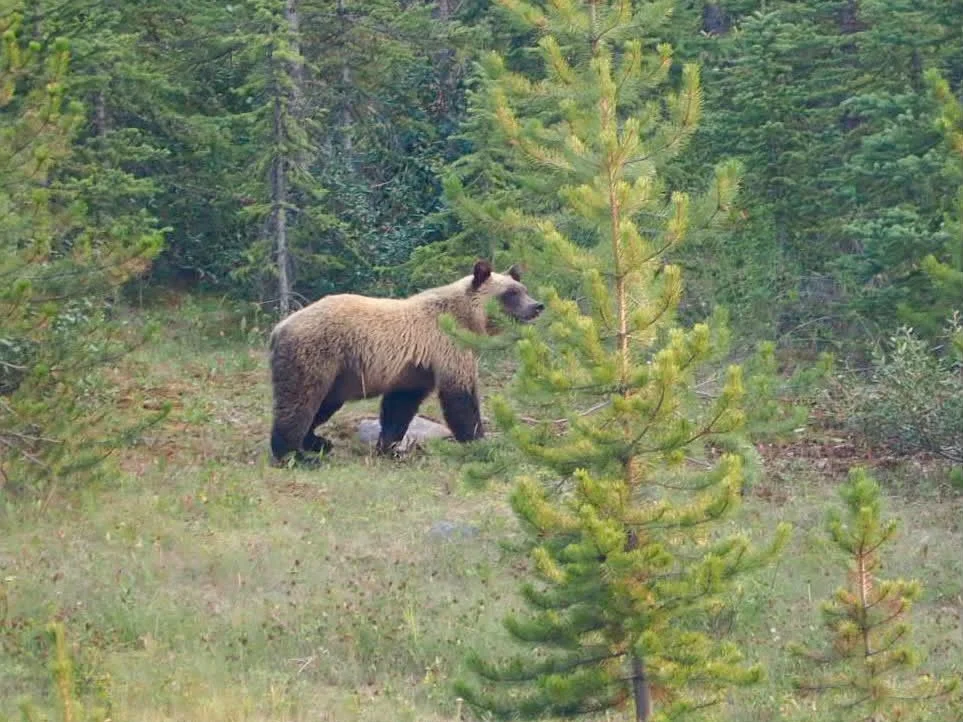
Grizzley bear spotting in Banff National Park
Canmore and Kananaskis
The next day, since the smoke was not clearing, we tried moving further east towards Canmore. We liked the town more than Banff: less touristy, more intimate, with a nice atmosphere. We also stopped at Quarry Lake Park, perfect for a few relaxing hours.
We had planned to hike East End of Rundle (EEOR) and Grassi Lakes, but both were inaccessible due to a landslide on the access road; in any case, Mount Rundle was completely covered by smoke and the hike would have lost much of its appeal. We therefore decided to push into Kananaskis Country, purchasing the required Kananaskis Conservation Pass online for day access.
There we drove the Spray Valley Road, a route famous for wildlife sightings. We saw big horn sheep and, around 7 p.m., were lucky enough to spot a young wolf at the side of the road. It stopped for a moment to look at us and then went back up into the forest. It was one of the most intense moments of the trip.
That night we stayed at Bow River Campground, a campground on the banks of the Bow River. It’s a nice, well-equipped facility, but the price felt a bit high compared to other, even nicer campgrounds we had used before. Smoke was still quite present in this area, so we decided to start heading back towards Vancouver, skipping regions still heavily affected by wildfires.
Return to the coast: Kamloops and Hope
On the way back west, the Kamloops area was where the smoke was at its worst: long stretches of highway inside a grey cloud, with some roads closed due to nearby fires. It was the least pleasant part of the journey in terms of environmental conditions.
We finally got out of the smoke as we reached Hope, not far from Vancouver. There we found a spot at Coquihalla Campground, a simple but complete forest campground. Showers worked with tokens, so not free, but overall it was perfectly fine for a transit night.
Squamish, Whistler RV Campground and Vancouver
Wanting to fit in one last hike, after having to skip several because of smoke, we chose Squamish as the “outdoor” finale of the trip. There we did the Stawamus Chief up to the First Peak. It’s a demanding trail, with significant elevation gain, but doable with a certain level of fitness. The final part of the climb to the first summit is fun, with chains and rock steps, and the view over the bay from the top is stunning. We didn’t continue to the other two peaks because the initial ascent had already tired us out.
For our final night of camping we returned to the Whistler area, this time at Whistler RV Campground, different from the Olympic Park of the first night. It’s a very large campground, with a small bar, play area and wide forested zones. Unfortunately, since we booked at the last minute, we only found a spot in the entrance parking lot, on a slightly sloping site. Not ideal, but in high season the Squamish–Whistler area fills up very quickly, so it’s understandable.
For the last two days, after returning the van, we stayed in Vancouver in an Airbnb. We really liked the city: Stanley Park is perfect to unwind after so many kilometres, and Granville Island offers a great mix of market, art and city life. It was an ideal, more urban and relaxed ending after so many days immersed in nature.
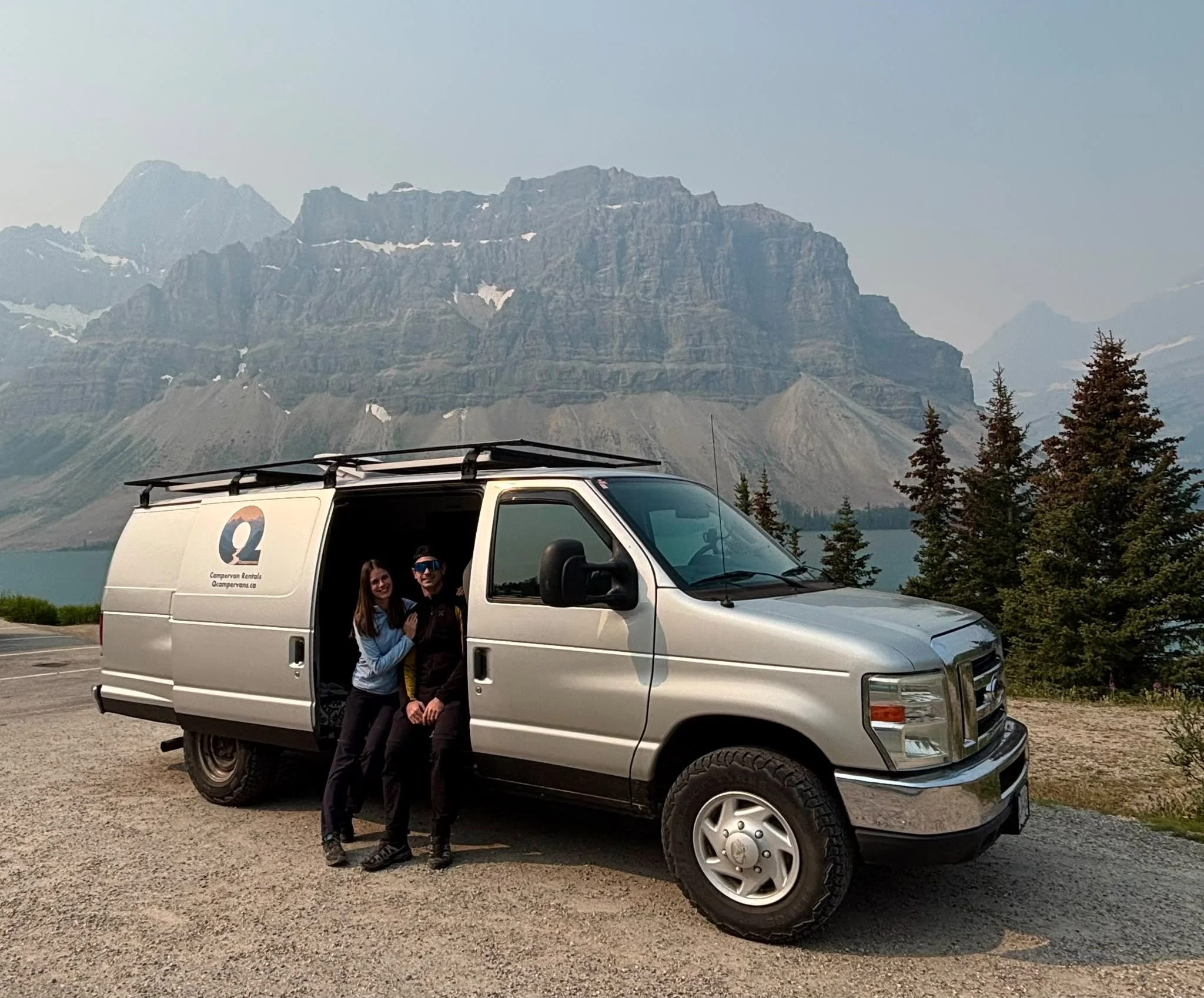
“Fred” with Waterfowl Lake and Mount Chephren in the background.
Thoughts on the van, overall experience, and Q Campervans
The campervan “Fred” was perfect for two people. Inside we had everything we needed. There was enough space for us and our luggage, solar panels providing constant power without needing to plug in, a comfortable bed, and a fully equipped kitchen. Having bear spray and insect repellent already on board was a real plus, especially on a trip where bears are always on your mind.
Our relationship with Q Campervans, and in particular with Quennel, was excellent. He was always available, helped us from the very first planning phase with itinerary suggestions and remained easy to reach during the trip, ready to step in if we had any doubts. We clearly felt how much he cares about his work and his customers’ experience, and that made a real difference.
Travelling by van between BC and Alberta is, in our opinion, the best way to experience these regions: the roads are wide and comfortable, parking for larger vehicles is plentiful and often less crowded than car lots, and campgrounds are designed to always offer at least a picnic table and direct contact with nature. You can see how much local Canadians love camping: many stay on their site during the day, cook outside and spend time in the open air.
As for safety around bears, we followed a few simple rules: we were two people, tried not to be completely alone on more remote trails, talked out loud to make our presence known, and never left food or rubbish around. We never had any dangerous close encounters; we only saw bears from the car, in a controlled situation. The bear spray provided with the van was an extra reassurance, even though fortunately we never had to use it.
On connectivity, the key thing is to know that in some areas – especially along the Icefields Parkway and in more remote sections – there is no cell coverage at all. Having offline maps and hike information already downloaded helps a lot. Road signs and park signage are clear, so we never really felt “lost”.
The real game-changing factor, more than rain, was wildfires and smoke. During our trip it rained very little and that didn’t cause any issues, while smoke from the fires heavily influenced several decisions. The FireSmoke Canada website helped us understand how the smoke plumes would move day by day and based on that we decided to leave the Banff–Lake Louise area earlier than planned and spend more days around the coast and Vancouver, where air quality was much better.
Overall, the trip was intense and beautiful, despite a few forced changes.
The combination of a well-equipped campervan, the support of an attentive local rental company, and the ability to adapt our plans based on real conditions (smoke, trail closures, etc.) made the experience smooth and truly memorable. If we were to do it again, we would choose a Q Campervan vehicle without hesitation.
From Quennel (Owner - Q Campervans):
“I am very grateful for Aurora and Federico. They wrote this without any persuasion or incentive. They have allowed me to post this on my blog for the sheer benefit of future renters and travellers of Western Canada. That shows a lot about their personality and character. Great people, great renters, and I’m thrilled to have had the honour to host them on their Canadian Road-trip.
Thank you so much for your support of Q Campervans.”